










Deploying robotics is hard enough—but scaling those systems over time is a different challenge altogether.
For many organizations, pilot deployments succeed, but scaling to full operations exposes gaps in architecture, integration, and planning.
This blog explores the common scalability roadblocks in warehouse and manufacturing automation, and how Boston Engineering helps businesses overcome them to build systems that deliver long-term value.
Continue reading below to learn more
The Boston Engineering Digital Solutions Portfolio
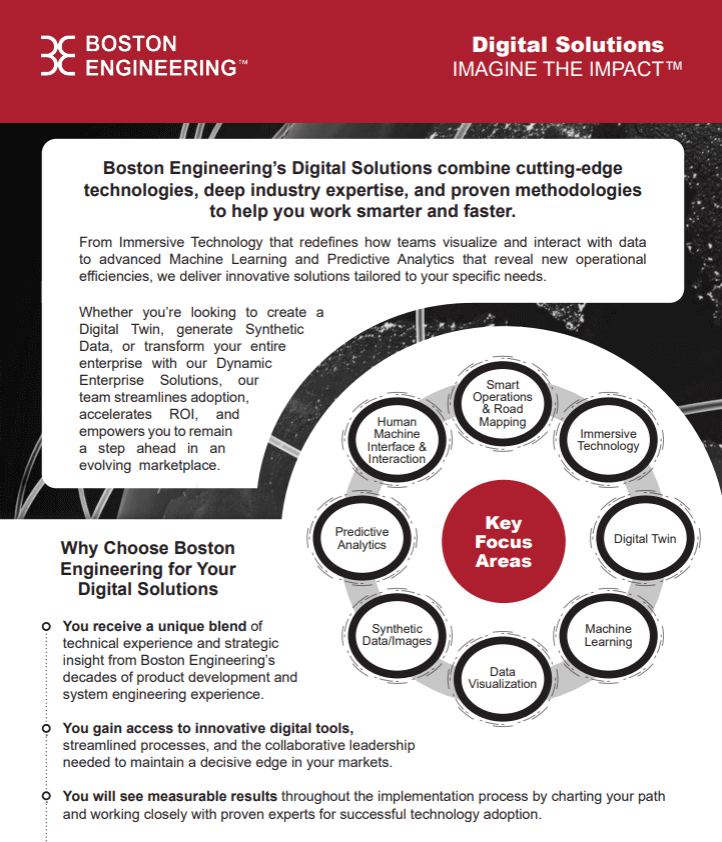
Boston Engineering’s comprehensive Digital Solutions Portfolio brings together cutting-edge technologies and engineering expertise to solve your most complex business challenges.
Download the Boston Engineering Digital Solutions Guide
By leveraging our Digital Solutions Portfolio, you gain a strategic partner committed to delivering measurable improvements in operational efficiency, decision-making capabilities, and competitive advantage. Our solutions span the entire digital transformation spectrum.
Our Discrete Digital Solutions include:

(continued from above)
Common Scalability Challenges in Robotics
1. Fragmented System Architectures
Robotic solutions built with disparate, siloed components often fail when new robots or modules are added. Seamless expansion requires architectures designed for interoperability—something many off-the-shelf solutions lack.
2. Rigid Software Frameworks
Systems that rely on proprietary or inflexible software frameworks struggle to integrate upgrades, additional sensors, or new intelligence layers.
Scalable systems, by contrast, embrace open software architectures like ROS2, which bind new capabilities without disruptive rewrites.
3. Limited Coordination Capabilities
As you add robots, orchestration and fleet coordination become more complex. Without planning for scale, throughput can actually decrease when more units are deployed.

Engineering Principles for Scalable Robotics
Layered System Architecture
Design systems with clear separation between hardware, control software, fleet management, and task planning. This modular design reduces complexity when you scale.
Standards-Based Communication
Open protocols and middleware make cross-device communication stable and extensible, enabling growth without breakdowns.
Fleet Orchestration and Monitoring
Scalable robotics require central orchestration systems that handle job queues, workload distribution, and health monitoring across units.

Technical Pillars of Scalability in Automation
Flexible Robotics Architecture
Scalability starts with strong architectural design—systems must be built from the ground up to accept new robots, controllers, and capabilities without breaking existing workflows.
Open Frameworks and Standards
Using industry-standard frameworks (such as ROS2) ensures that systems can integrate future software components and tools as they emerge.
Orchestrated Fleet Intelligence
Coordinating multiple robots intelligently ensures that performance improves, not degrades, as you scale up.
Case Study: Scaling AMRs in a Busy Distribution Center
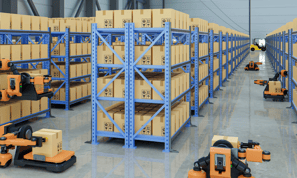 In a large fulfillment hub, initial AMR deployment may handle a fraction of total throughput. But when demand spikes, the same infrastructure must support 2–5× the robot count without sacrificing performance.
By incorporating scalable architecture and fleet vision, systems can adapt seamlessly to volume spikes and layout changes.
Boston Engineering’s Scalable Systems Methodology
Boston Engineering tackles scalability challenges holistically:
- Architectural planning that anticipates future growth
- Integration strategies that enforce modularity and interoperability
- Use-case-specific workflows designed for scale
- Performance evaluation and scalability testing long before deployment
This approach minimizes surprises during expansion and ensures that robotic systems remain efficient, robust, and adaptable.
.png?width=760&height=317&name=Robotics%20Background%20image%20(2).png)
The 2025 Boston Engineering Technology Overview is Here!
Embrace the future trends that are shaping a new era of engineering excellence. Download for groundbreaking insights!
 Access these exclusive technology insights and empower yourself and your organization to stay ahead of the curve. Download your copy of the Boston Engineering 2025 Technology Overview today!
Key Topics:
- Re-shoring as a Competitive Advantage
- Modular Sustainment Robotics
- Embedded Systems
- DFX (Design for X)
- Control Systems
- Digital Solutions
- Mechanical Engineering
- Software Engineering
Download the Boston Engineering 2025 Technology Overview
Download the Latest Immersive Technology Whitepaper from Boston Engineering

Augmented Reality (AR) is revolutionizing the way we interact with digital content, merging the physical and digital worlds in innovative ways. In this white paper, we provide a comprehensive overview of AR, exploring its definition, potential uses, challenges in adoption, and strategies for companies to embrace this transformative technology.
Download to begin Embracing the Future

Is Your Company Ready for Smart Operations?
Implementing smart operations requires careful planning, the right expertise, and a clear roadmap. The companies that succeed are those that partner with experts who understand how to integrate these advanced technologies seamlessly into their existing workflows.
At Boston Engineering, we specialize in engineering, automation, and smart technology integration, helping businesses:
- Identify the right smart operations strategy based on their unique needs and goals.
- Seamlessly integrate AI, IIoT, robotics, and automation into existing operations.
- Ensure a smooth transition by minimizing downtime and maximizing ROI.
- Develop scalable, future-proof solutions that drive long-term success.
Smart operations aren’t just a passing trend—they are the future of industrial efficiency and growth. Companies that take the first steps today will lead their industries tomorrow.
Contact us today to explore how smart operations can transform your business and position you for long-term success.

No matter the challenge, our team possesses the expertise in the engineering disciplines and technologies you need to bring your vision to life. Impossible Challenge? Try Us.

Imagine your Impact: Stay up-to date- with the latest insights and trends we're watching. Add your email address below and sign up for a Monthly Summary of our most impactful posts!
